
K-12 Outreach

The American 
Civic Tradition

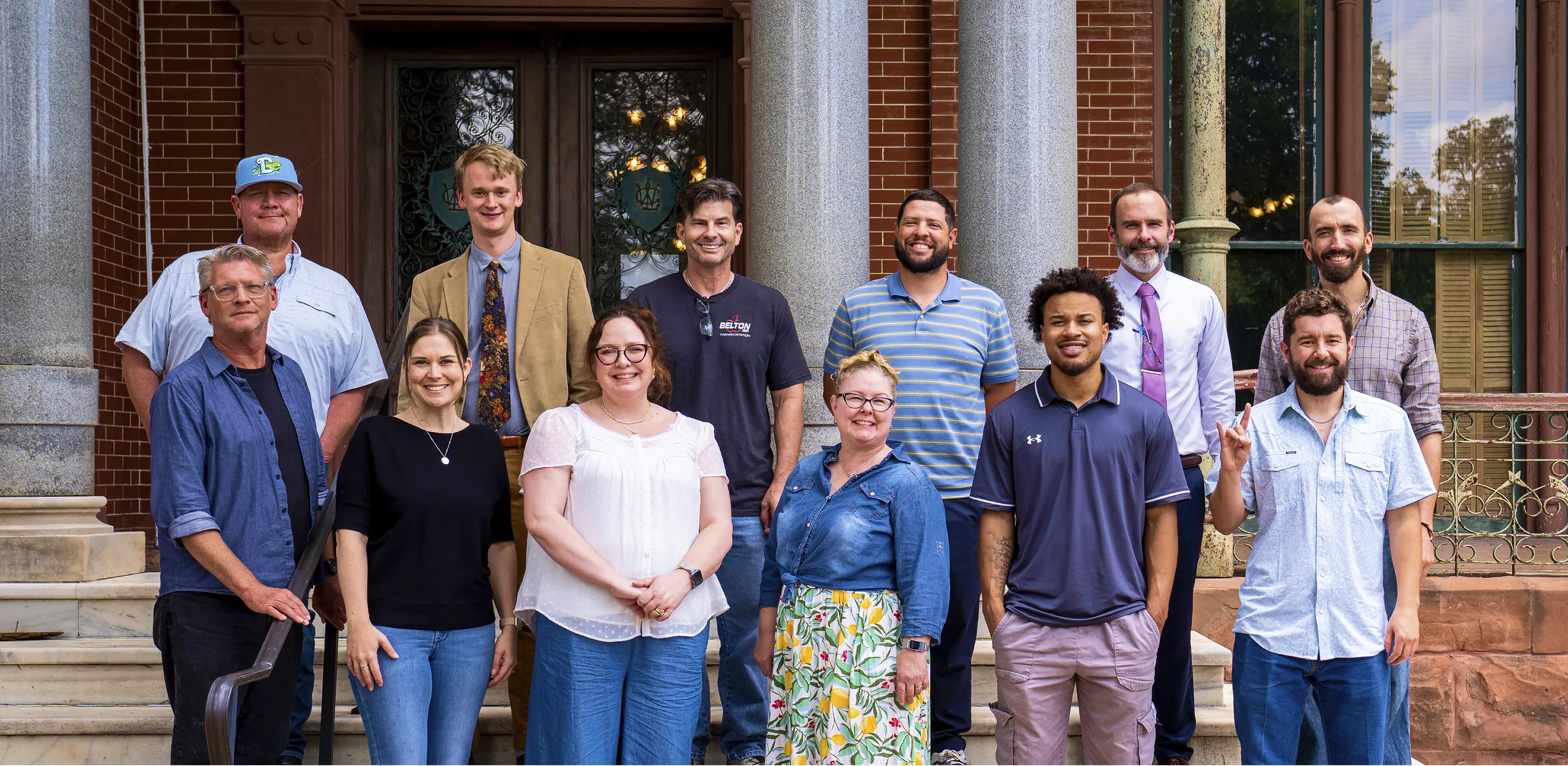
Group of twelve people posing on steps in front of a brick building with columns and a wooden door.

Overview

Professional Development Seminars for Teachers

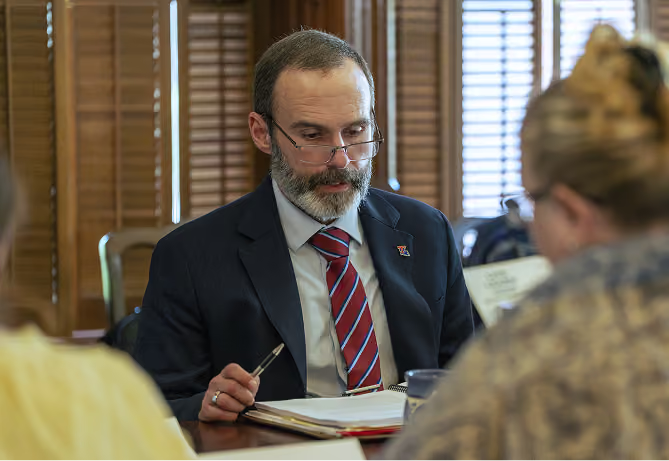
Man in a suit and striped tie reads documents at a table with others in a wood-paneled room.

Faculty from the School of Civic Leadership at UT Austin offer in-depth seminars on the American Civic Tradition.

Supported by a $1.8 million grant from the U.S. Department of Education awarded through the American History and Civics Seminars program, the Summer Institute program addresses a critical national priority to support the K-12 teaching corps entrusted with transmitting the principles of American constitutional self-government: genuine civic renewal begins with well-prepared educators.

Over the next three years, SCL faculty are leading a series of content-rich professional development programs designed to provide teachers with a coherent sequence of instruction anchored in the close study of primary sources and the practice of Socratic pedagogy.

This three-day seminar series examines the theoretical ideas that informed the creation and development of America’s political system and some of the contemporary challenges to the maintenance of American democracy.

Topics include the Declaration of Independence, free speech in a democracy, slavery and the American founding, and major social and political movements in American history.

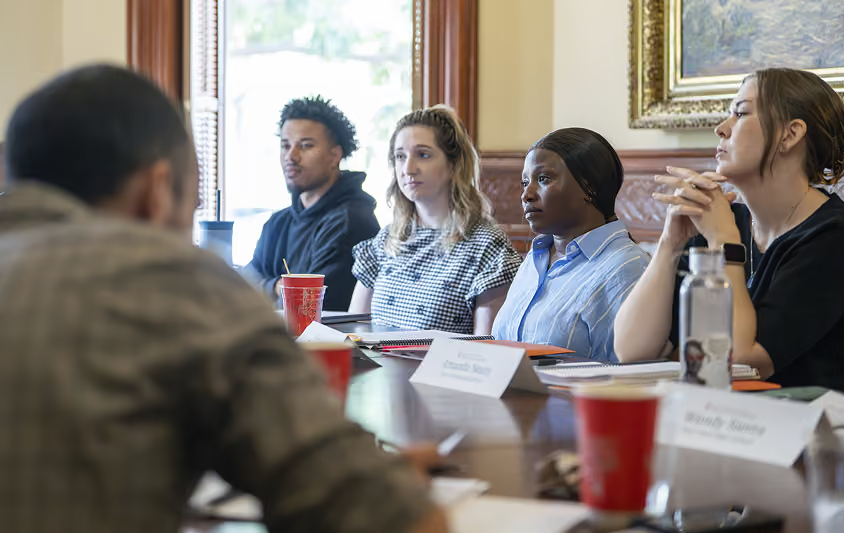
A diverse group of adults attentively listening during a meeting or seminar in a room with wood decor.

Goals

Goals of the Initiative

Understand the texts and ideas that influenced the Founders during the creation of the Declaration of Independence and the Constitution.
Study the perspectives of historical figures who were engaged in the central debates that shaped the United States.
Consider how fundamental principles introduced at the Founding have influenced political and social movements throughout American history.
Learn how to incorporate these primary sources and new knowledge into lessons for students.

Seminars in Summer 2026 were offered in these cities:

Austin
Dallas
Fort Worth
Houston
San Antonio

2027 participating cities are TBD.

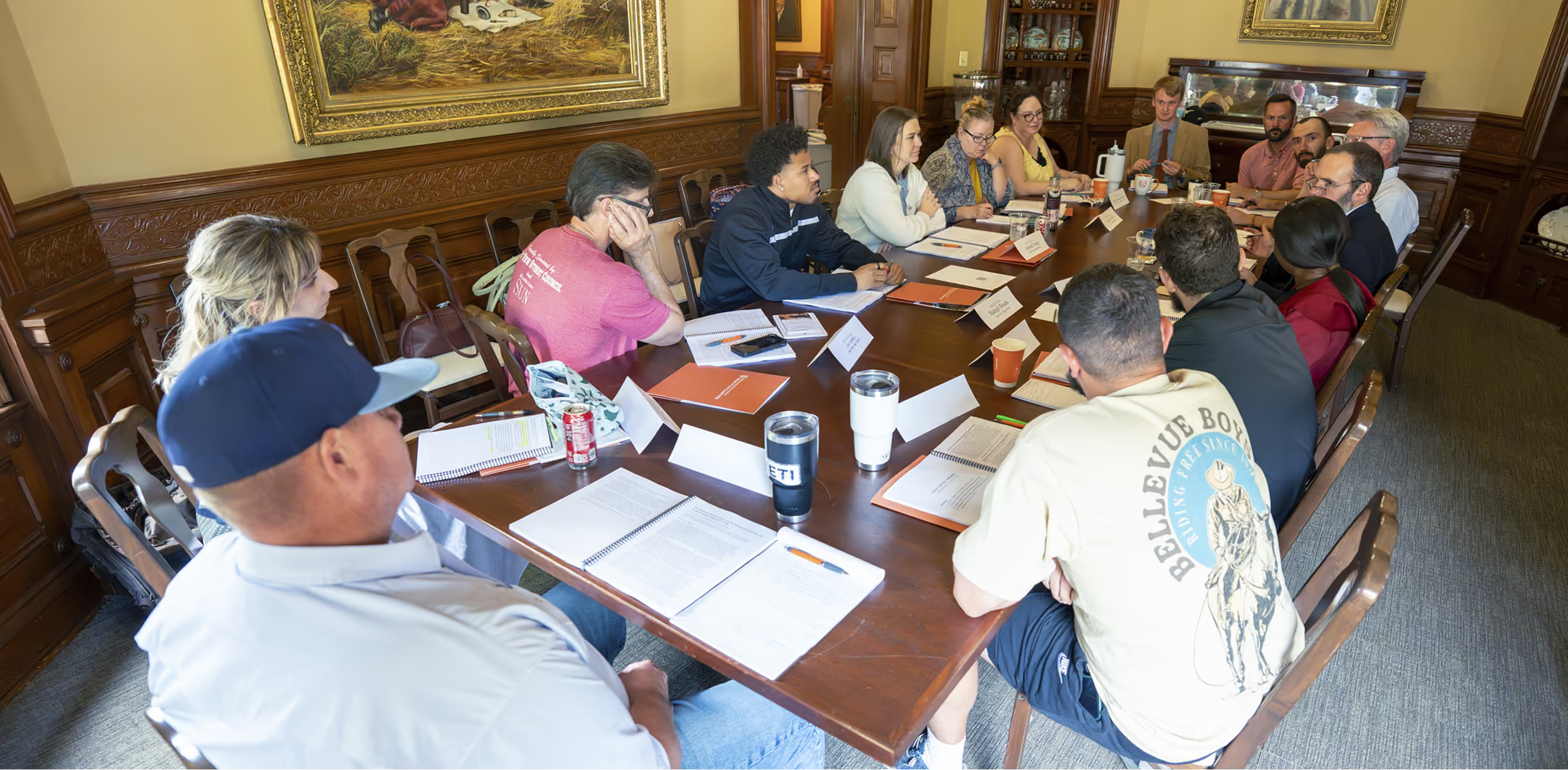
Group of adults seated around a large wooden table in a meeting room discussing documents.

Sample Guiding Themes and Questions

These seminars are oriented around the discussion and exploration of shared questions. Ideas interact with politics and history. To see how, we follow out these and other similarly profound questions.

Natural Rights and the Social Contract

  • What is the meaning of a state of nature and natural rights?
  • To what extent is the Declaration influenced by the political philosophy of John Locke?

Who Should Interpret the Constitution?

  • Should constitutional interpretation be left solely to the Courts, or do the executive and legislative branches have a role to play?
  • When should a decision on matters of constitutional interpretation be considered final?

The Executive and Congress

  • To what degree do liberal democracies need energetic executive power?
  • What are the different characters of the Senate and the House?

Federalism

  • What are the advantages and disadvantages of a federal constitution?

Slavery and the Constitution

  • How did some of the Founders expect to see the problem of slavery resolved?
  • How does Abraham Lincoln develop his argument against popular sovereignty with respect to slavery?

Civil Rights Movement

  • How should an individual deal with a law that he or she recognizes is unjust?

Sample Texts and Authors

  • Declaration of Independence and the US Constitution
  • John Locke, Second Treatise on Government
  • Federalist and Anti-Federalist Papers Letters
  • Speeches from James Madison, Thomas Jefferson, and Patrick Henry
  • Letters and Speeches of Abraham Lincoln and Frederick Douglass
  • Speeches from Woodrow Wilson and Franklin Roosevelt
  • Speeches from Martin Luther King, Jr. and Malcolm X
  • Texts from William Brennan and Antonin Scalia

Program Details

Participation in these small, seminar discussions is selective. Breakfast, lunch, refreshments, and reading packet are provided.

Participating teachers receive a stipend of $1,000 and certification of attendance for 20 hours of professional development.

2026 Participating Faculty

Dr. Vince Bagnulo
Texas State University
Dr. Alexander Batson
UT Austin
Dr. Catherine Borck
UT Austin
Dr. Alexis Carré
UT Austin
Dr. John Kitch II
UT Austin
Dr. Leo Moradi
University of North Texas
Dr. Matthew Reising
UT Austin
Dr. Richard Ruderman
University of North Texas

Daily Schedule

Breakfast
8:30 a.m. to 9:00 a.m.
Session I
9:00 a.m. to 10:30 a.m.
Session II
10:45 a.m. to 12:15 p.m.
Lunch
12:15 p.m. to 1:15 p.m.
Session III
1:15 p.m. to 3:00 p.m.

Join us!

Seminars in Summer 2026 were offered in these cities:
2027 participating cities are TBD.

If you’re interested in learning more about this professional development seminar and thinking of participating, reach out to us using the contact form on this page.
We are currently working on our next cohort of teachers and we hope you’ll join us!

FAQs

Your Questions answered

What is the Teachers Seminar on the American Civic Tradition?

It is a three-day professional development seminar series led by faculty from the School of Civic Leadership at UT Austin. The seminars examine the theoretical ideas that informed the creation and development of America's political system, along with some of the contemporary challenges to maintaining American democracy. The program is supported by a $1.8 million grant from the U.S. Department of Education, awarded through the American History and Civics-Seminars program, and runs over three years with instruction anchored in the close study of primary sources and Socratic pedagogy.

What topics and texts does the seminar cover?

Sessions are organized around guiding themes including natural rights and the social contract, who should interpret the Constitution, the executive and Congress, federalism, slavery and the Constitution, and the Civil Rights Movement. Sample texts and authors include:

  • The Declaration of Independence and the U.S. Constitution
  • John Locke, Second Treatise on Government
  • The Federalist and Anti-Federalist Papers
  • Speeches from James Madison, Thomas Jefferson, and Patrick Henry
  • Letters and speeches of Abraham Lincoln and Frederick Douglass
  • Speeches from Woodrow Wilson and Franklin Roosevelt
  • Texts from William Brennan and Antonin Scalia
  • Speeches from Martin Luther King, Jr. and Malcolm X

When and where are the seminars held?

Seminars in Summer 2026 were offered in Austin, Dallas, Fort Worth, Houston, and San Antonio. Participating cities for 2027 are still to be determined.

Each seminar day runs from 8:30 a.m. to 3:00 p.m., beginning with breakfast and followed by three discussion sessions with a break for lunch.

What do participating teachers receive?

Participating teachers receive a stipend of $1,000 and certification of attendance for 20 hours of professional development. Breakfast, lunch, refreshments, and a reading packet are provided. Because the discussions are small and seminar-based, participation is selective.

Show more

More SCL

About us

Learn more about the School of Civic Leadership.

Scholarships

Explore scholarships to help fund your studies.

Events

Engage with experts, workshops, and discussions on today’s civic challenges.

Applications

Apply now to join a community focused on service and social impact.